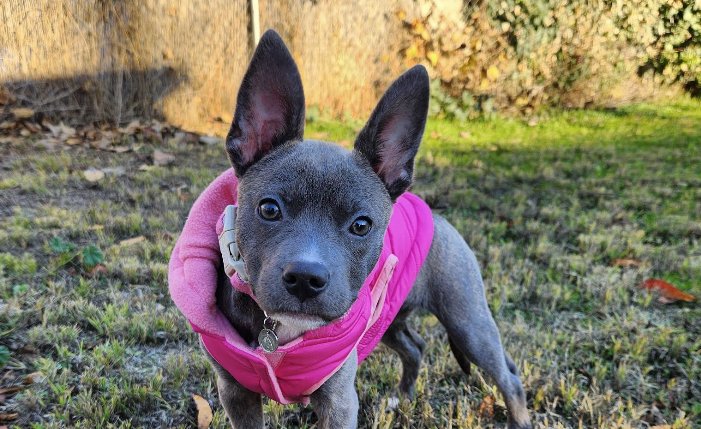
A small puppy named Yugi, recognizable by his oversized ears and bright pink jacket, is recovering at home after being struck by a self-driving car in a residential neighborhood on Thursday — sparking renewed national debate about the readiness of autonomous vehicle technology in areas where children and animals are present.
The incident occurred shortly after noon when the autonomous vehicle, operating without any human driver, failed to stop as Yugi darted across the street. The vehicle's collision-avoidance sensors, designed primarily to detect adult pedestrians, cyclists, and large obstacles, apparently did not classify the small dog as a hazard requiring a full stop.
What the Security Footage Showed
Security camera footage from a home across the street showed the vehicle reduce its speed slightly before impact but not brake fully. Yugi was thrown several feet by the collision. Bystanders rushed to the scene and transported him to an emergency veterinary clinic within minutes of the accident.
Veterinarians confirmed that Yugi sustained a broken front leg and bruised ribs but is expected to make a complete recovery. "He is an incredibly tough little one," said Dr. Alicia Marsh, who treated him. "He is already putting weight on his leg and his spirit has not dimmed at all. He is a fighter."
A Known Gap in Autonomous Vehicle Sensors
Transportation safety researchers say the incident highlights a well-documented gap in current autonomous vehicle sensor suites. Most self-driving systems are trained on datasets that heavily weight human pedestrian detection, often performing significantly less reliably when presented with small animals or objects close to the ground.
"The radar and lidar systems on these vehicles are tuned for objects above a certain height threshold," said Dr. Kevin Okafor, a robotics safety researcher at Carnegie Mellon University. "A small dog — especially one wearing a soft quilted garment that can scatter lidar returns unpredictably — may register as road debris or a stationary object rather than a living creature that could be in motion."
Growing Calls for Reform
Animal welfare advocates and road safety groups immediately called on the National Highway Traffic Safety Administration to introduce mandatory animal-detection performance standards for autonomous vehicles. Currently, federal testing guidelines for self-driving cars focus almost entirely on human road users.
"Yugi's case will not be the last unless we act," said Sarah Jennings of the Road Safety Coalition. "We need enforceable requirements that AV systems detect and respond appropriately to animals of all sizes, not just adult humans."
The company operating the autonomous vehicle released a statement saying it was cooperating fully with local traffic investigators and had begun an internal review of sensor telemetry data from the vehicle at the time of the incident.
As for Yugi, he appears blissfully unaware of the national controversy swirling around his recovery. His family shared photos of him resting at home wrapped in a fresh pink coat, tail wagging.